What Balance in Photography: What It Is and Why It Matters
White balance is one of the most important, and often misunderstood, settings in photography. If you’ve ever taken a photo that looked too yellow indoors or too blue in the snow, white balance is the reason.
Here’s what it is and why it matters.
What Is White Balance?
White balance (WB) adjusts the colours in your image so that objects that are white in real life appear white in your photo.
Different light sources produce different colour tones. Our eyes automatically adapt to these changes. Cameras don’t… unless you tell them how.
White balance tells your camera how to interpret the colour of light in a scene.
Understanding Color Temperature
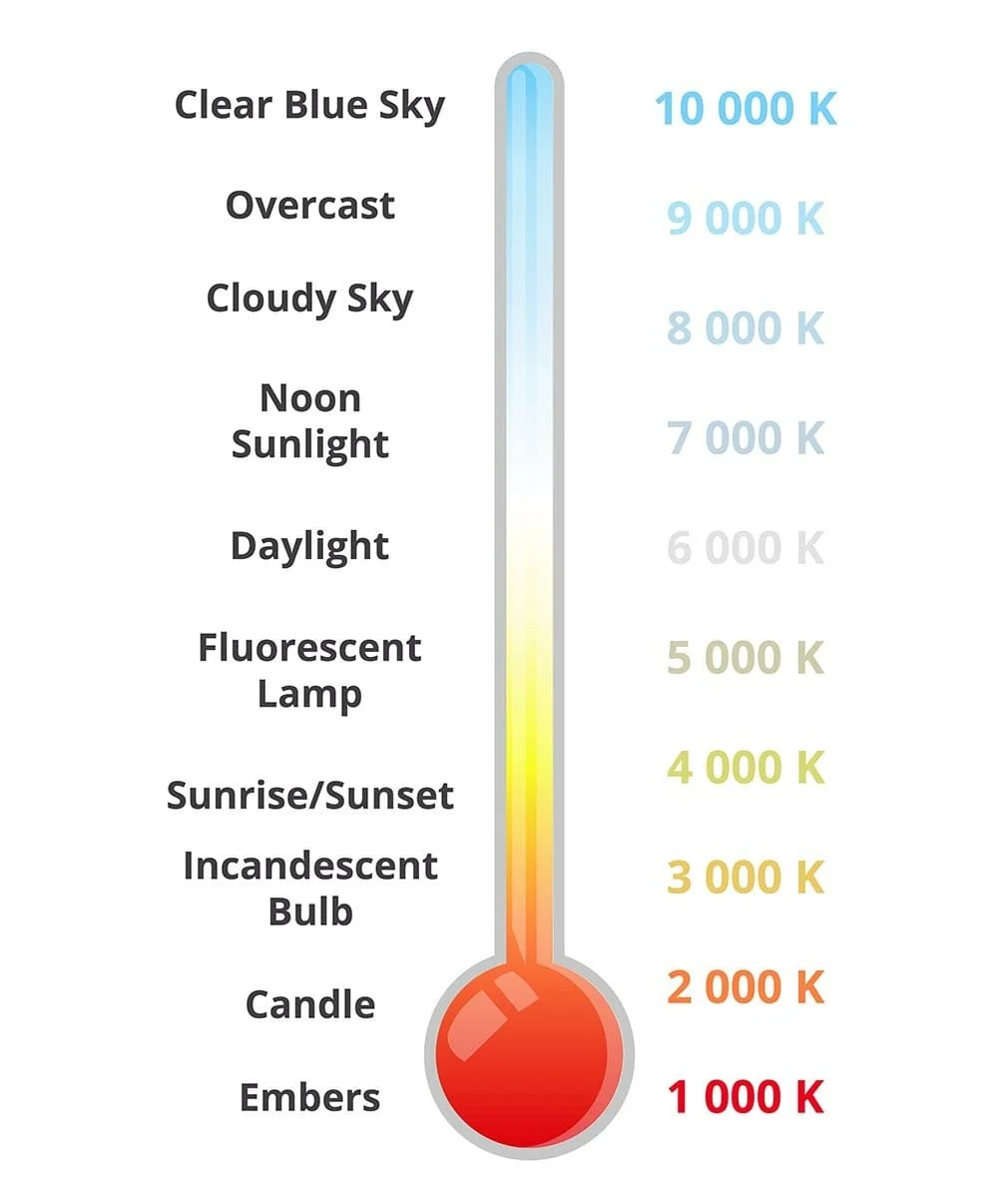
Light has a colour temperature measured in Kelvin (K):
2,000–3,000K – Warm, orange light (candles, tungsten bulbs)
5,000–6,500K – Neutral daylight
7,000K+ – Cool, blue light (shade, overcast skies)
Lower Kelvin = warmer (more orange)
Higher Kelvin = cooler (more blue)
If your white balance setting doesn’t match the light source, your image will have a colour cast.
Common White Balance Settings
Most cameras include:
Auto (AWB) – Camera decides
Daylight – For sun
Cloudy/Shade – Adds warmth
Tungsten – Cools warm indoor bulbs
Fluorescent – Corrects green indoor light
Flash – Balances flash lighting
Auto works well in many situations, but it can struggle in strong or mixed lighting.
Why White Balance Matters
1. Accurate Skin Tones
Incorrect white balance can make people look orange, pale, or slightly green. Small shifts make a big difference.
2. Professional Look
Colour casts often make images feel “off.” Correct white balance makes photos look polished and natural.
3. Creative Control
White balance isn’t just about accuracy — it’s also a creative tool.
Warmer tones feel cozy and inviting.
Cooler tones add drama or tension.
You don’t always have to “correct” the scene. Sometimes preserving warmth (like at sunset) creates a stronger image.
RAW vs JPEG
If you shoot RAW, white balance can be adjusted later without damaging the image.
If you shoot JPEG, white balance is baked in — major corrections can reduce quality.
For flexibility, RAW gives you more control.
Mixed Lighting Challenges
Scenes with multiple light sources (like window light plus indoor bulbs) are tricky. No single white balance setting will perfectly fix everything.
In these situations, photographers may:
Turn off certain lights
Use colour gels
Make selective adjustments in editing
Final Thoughts
White balance controls how your camera sees colour. It affects realism, mood, and overall image quality.
Learn how light color works, and you gain both technical precision and creative freedom. Mastering white balance is one of the simplest ways to instantly improve your photography.